 Motors Trak™
How To Winterize An Outboard Motor And Keep A Record Of It
When the boating season ends, an outboard that is simply parked can pick up three kinds of damage over the winter. Water left in the cooling passages or the gearcase can freeze and crack metal. Fuel goes stale and gums up the fuel system. Salt and moisture start corrosion inside the engine.
Winterizing prevents all three. Many owners do it themselves in an afternoon, and many have a marina do it. Either way, it pays to know what the job includes so you can check the work and record it. This guide covers the common steps for a typical outboard. Two stroke and four stroke engines differ, and so do brands, so your owner's manual is the final word.
Before you start
Read the storage section of your owner's manual. BoatUS stresses checking the manual for your specific engine, because procedures vary. Some newer outboards even have a built-in winterizing or fogging mode that automates part of the job.
Gather what you need.
- Flushing attachment ("earmuffs") or a flush port adapter and a garden hose
- Marine fuel stabilizer
- Fogging oil, if your manual calls for it
- Lower unit gear oil of the type your manual specifies, plus new drain and vent plug washers
- A gear oil pump, drain pan and rags
- Engine oil and filter for four stroke engines
- Spark plugs, if they are due
Steps
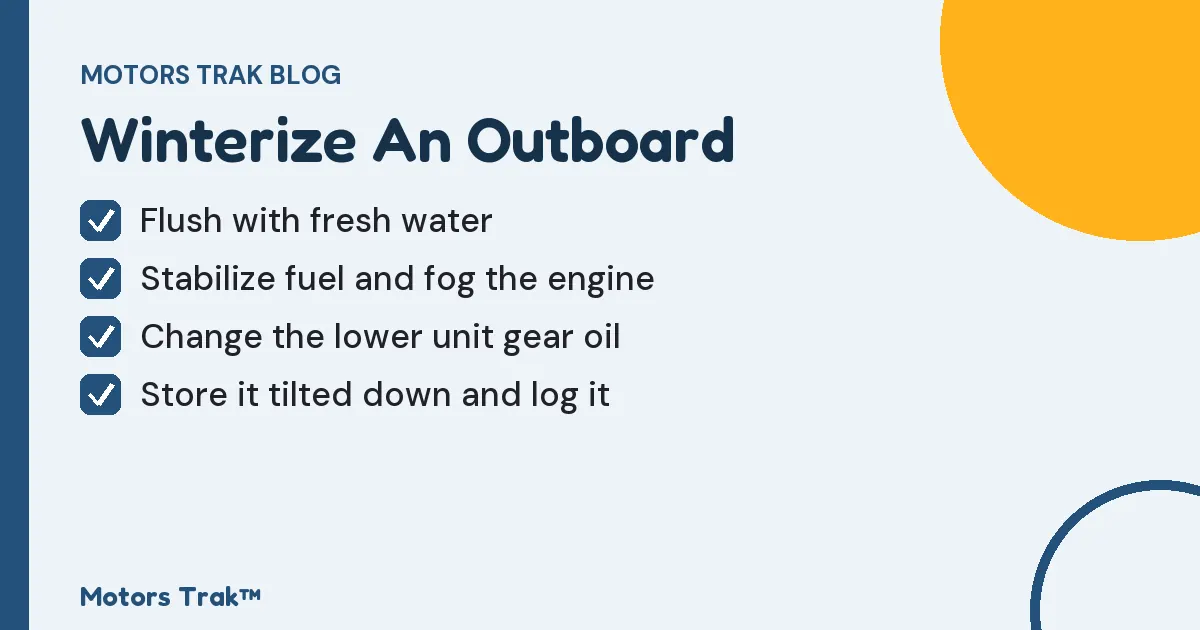
- Stabilize the fuel. Add marine fuel stabilizer to the tank in the amount the label says. Run the engine long enough for treated fuel to reach the engine. Your manual will say whether to keep the tank full or drain portable tanks and carburetors for storage.
- Flush the cooling system. Run fresh water through the engine with earmuffs or the flush port, following your manual. This matters most after salt or brackish water. Yamaha advises flushing after use in salt water all season long. Never run an outboard without a water supply.
- Fog the engine. Fogging oil coats the inside of the engine to protect it from corrosion while it sits. The method differs by engine type, and some modern fuel injected outboards use a different procedure or have it built in. Follow your manual here.
- Change the engine oil and filter on a four stroke. Old oil holds acids and moisture. A fresh change before storage means the engine sits with clean oil all winter.
- Change the lower unit gear oil. BoatUS lists this as a key winter step. Drain the old gear oil from the bottom plug with the top vent plug open. Look at what comes out. BoatUS notes that milky gear oil is a sign water is getting in, often through a worn seal, and water left in the gearcase can freeze and crack it. Refill from the bottom until oil comes out the vent, then reinstall both plugs with new washers.
- Grease the fittings and check the prop. Grease the steering and tilt fittings your manual lists. Pull the propeller, look for fishing line wrapped behind it, grease the shaft, and reinstall it.
- Care for the battery. Charge it fully, disconnect it, and store it where it will not freeze, or keep it on a maintainer.
- Store the motor tilted down. BoatUS advises leaving the outboard in the down position for storage so water drains from the cooling system and lower unit.
- Log the job. Write down the date, the engine hours, the oils and parts used, and anything you saw, such as milky gear oil or a damaged prop.
Engine hours tell you when service is due
Outboards track wear by engine hours, not miles. Yamaha's published maintenance schedule, for example, includes an initial service at 20 hours or 3 months, then service at 100 hours or once a year, and more items at 300 hours or 3 years, whichever comes first. Yamaha also says those intervals should be shortened for severe use. Other brands use their own numbers, so check your manual.
That means a winterizing log needs the hour meter reading as well as the date. A boat used 30 hours a season and one used 150 hours need different care, even if both get winterized every November. We explain the idea in more depth in engine hours vs miles.
Check for recalls while the boat is out
Off season is a good time to check for open recalls. The US Coast Guard runs a recall search for recreational boats and associated equipment on its boating safety site. Recall repairs are best done before launch day.
Keep the record with the boat
Winterizing records matter at sale time. A buyer looking at a used boat will want to know the hours, when the gear oil was last changed, and whether the engine was winterized each year. A log with dates and hour readings answers those questions.
Motors Trak tracks boats in engine hours and sets reminders by date or hours, whichever comes first. Storage mode gives you a seasonal checklist and pauses hour reminders while the boat sits for winter. It also checks for US Coast Guard recalls on boats, keeps photos and receipts with each entry, and exports a service history PDF or CSV. See the full feature list. If you also own a car or a mower, the same garage holds them too, and the steps for storing a lawn mower for winter follow a similar pattern.
Putting away a camper too? See how to winterize an RV.
Frequently asked questions
Do I need to winterize an outboard motor?
If the motor will sit through freezing weather, yes. Water left in the cooling system or gearcase can freeze and cause damage, and stale fuel can clog the fuel system. Even in milder climates, stabilizing fuel and fogging protect an engine that will sit for months.
Should outboard motors be stored up or down for winter?
BoatUS advises storing an outboard in the down position. That lets water drain out of the cooling passages and lower unit instead of sitting where it can freeze.
What does milky lower unit oil mean?
Milky or creamy gear oil usually means water has mixed into it, often through a worn seal. BoatUS notes this is a sign to have the seals checked, since water in the gearcase can freeze and crack the housing.
Can I winterize my outboard myself?
Many owners do, using the steps in their owner's manual. If your engine has a built-in winterizing mode or you are unsure about fogging or gear oil, a marina or dealer can do the job. Either way, record the date and engine hours.
Sources
- BoatUS: How To Winterize Boat Engines And Drives
- Yamaha Outboards: How To Winterize Your Yamaha Four Cylinder Outboard
- US Coast Guard Boating Safety: Recalls