 Motors Trak™
How To Winterize An RV Water System, Step By Step
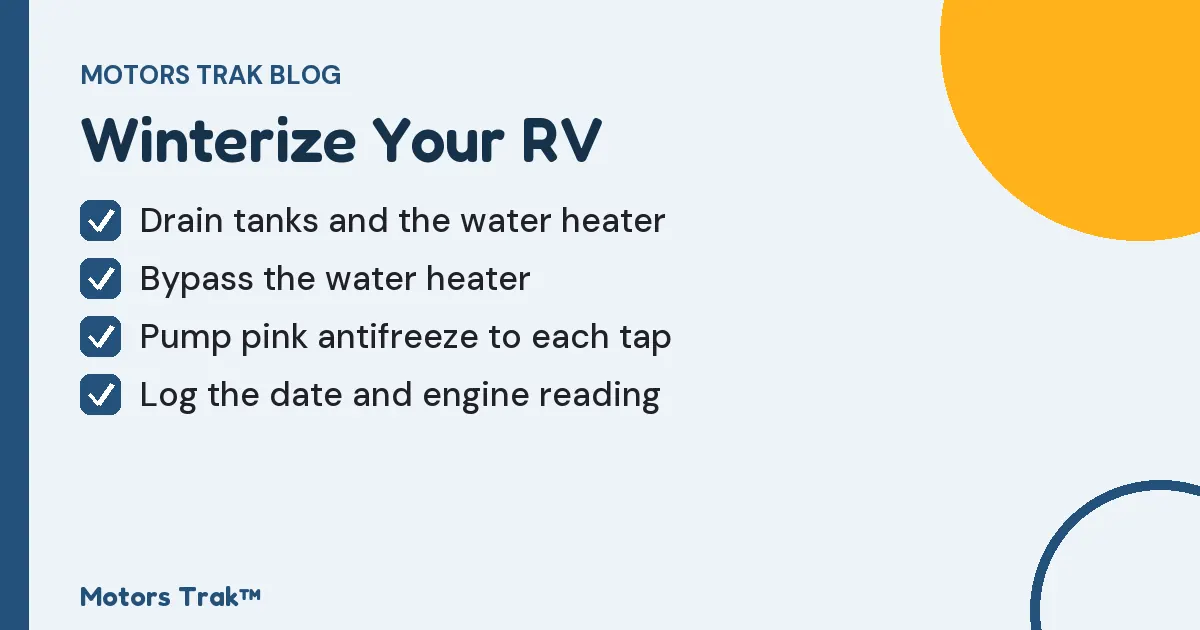
To winterize an RV, drain the fresh and holding tanks and the water heater, set the water heater bypass, then pump nontoxic RV antifreeze through every faucet, shower and toilet until it runs pink. After the plumbing, take care of the batteries, the engine or generator, and the tires before storage.
Water left in RV plumbing can freeze, expand and crack lines, fittings and the water heater tank. Repairs are a hassle in spring, and the job is preventable.
Your owner's manual is the authority for your rig. Valve names, locations and steps vary by model, so read that section first.
What you need
- RV antifreeze, the pink kind made for drinking water systems. Plan on a few gallons for a typical trailer or motorhome. Larger rigs need more.
- A water heater bypass kit, if your RV does not already have one.
- A hand pump kit or siphon hose, if your RV has no built-in winterizing valve.
- Wrench or socket for the water heater drain plug or anode rod.
- Gloves and a bucket.
Never use automotive antifreeze in the water system. Winnebago's owner manuals warn that automotive coolant contains ethylene glycol, which is toxic if swallowed.
Steps
- Turn off the water heater and let it cool. Shut off the gas and electric for the heater. Hot water and pressure can burn you.
- Drain the fresh water tank. Open the low point drains and the fresh tank drain.
- Empty and rinse the holding tanks. Dump the black tank first, then the gray tank, at a proper dump station.
- Drain the water heater. Remove the drain plug or anode rod and open the pressure relief valve to let it drain fully. Winnebago notes that draining it first means less water to push out later.
- Set the bypass. Turn the water heater bypass valve to BYPASS so antifreeze goes to the plumbing and not into the heater tank, which would waste gallons.
- Close all drains. Put the water heater plug back and close the low point drains before you add antifreeze.
- Connect the antifreeze. Turn the winterizing valve near the pump and put the siphon tube in the antifreeze jug, or use a hand pump at the city water inlet.
- Run each faucet. Turn on the water pump. Open the hot side of the closest faucet until antifreeze runs pink, then the cold side. Repeat at every sink, the shower and the outdoor shower, working from closest to farthest.
- Flush the toilet until pink antifreeze appears in the bowl.
- Pour a cup or two of antifreeze down each drain so the traps are protected.
- Turn off the pump and open a faucet briefly to release pressure.
- Handle the extras. Ice makers, washers, dishwashers and water filters each need their own steps from the owner's manual. Remove filter cartridges.
Some owners blow out the lines with compressed air before adding antifreeze. Winnebago manuals say to leave the bypass in its normal position while blowing out the lines and to use BYPASS only while pumping antifreeze. Use low pressure and follow your manual.
Engine and generator
A motorhome has an engine, and many RVs have a generator. Both need care before a long rest.
- Fill the fuel tank and add a fuel stabilizer, if your manual recommends it, then run the engine and generator long enough to move treated fuel through.
- Change the oil if it is due, so used oil with acids does not sit for months.
- Check the coolant strength for your winter temperatures.
- Many generator makers suggest running the generator under load for a while each month in storage. Check your generator manual.
Our guide to a portable generator maintenance schedule covers hour based service for generators, and engine hours vs miles explains why a generator is tracked in hours.
Batteries, tires and the body
- Charge the house and chassis batteries fully. Disconnect them or use a battery disconnect, or remove them and store them somewhere cool and dry with a maintainer.
- Inflate the tires to the pressure on the placard. Cover them to block sun if the RV sits outside.
- Clean the fridge, leave the door propped open and remove all food.
- Check the roof, seals and seams for cracks, and close vents and covers.
- Block entry points for mice and insects.
Write it down
The spring version of this list is the reverse. You will flush the antifreeze, sanitize the system, set the bypass back to normal and check every fitting for leaks. Knowing exactly what you did in the fall makes that much easier.
Write down the date, the engine miles or generator hours, how much antifreeze you used and anything that needs fixing in spring.
Track the RV with everything else
Motors Trak handles RVs, trailers and generators along with your cars and boats, in miles, kilometers or engine hours. Storage mode with seasonal checklists pauses mile and hour reminders while the RV is put away, so you are not nagged about an oil change in January. Log the winterizing as a service entry, attach photos of the valves set for storage, and the record is there in spring. See the full feature list.
Storing other machines too? See how to winterize an outboard motor and how to store a motorcycle for winter.
Frequently asked questions
How much RV antifreeze do I need to winterize?
A typical trailer or motorhome often needs a few gallons when the water heater is bypassed. Larger rigs with more fixtures need more. Bypassing the water heater saves a lot, because the tank would otherwise fill with antifreeze.
Can I use car antifreeze in my RV water lines?
No. Automotive antifreeze contains ethylene glycol, which is toxic. Use only nontoxic RV antifreeze made for drinking water systems, as RV manufacturers instruct.
Do I need to bypass the water heater when winterizing an RV?
Yes, when you pump antifreeze. The bypass keeps antifreeze out of the water heater tank, which you drain instead. Check your manual for where the valves are on your model.
Is blowing out the lines enough to winterize an RV?
Some owners only blow out the lines with compressed air. Water can stay in low spots and traps, so many owners add RV antifreeze too. Follow the method in your owner's manual.
Sources
- Winnebago: Winterizing Your RV
- Winnebago: RV Winterizing Guide, Helpful Tips and Special Considerations
- Camping World: How To Winterize Your RV