 Motors Trak™
How To Store A Motorcycle For Winter With A Garage Checklist
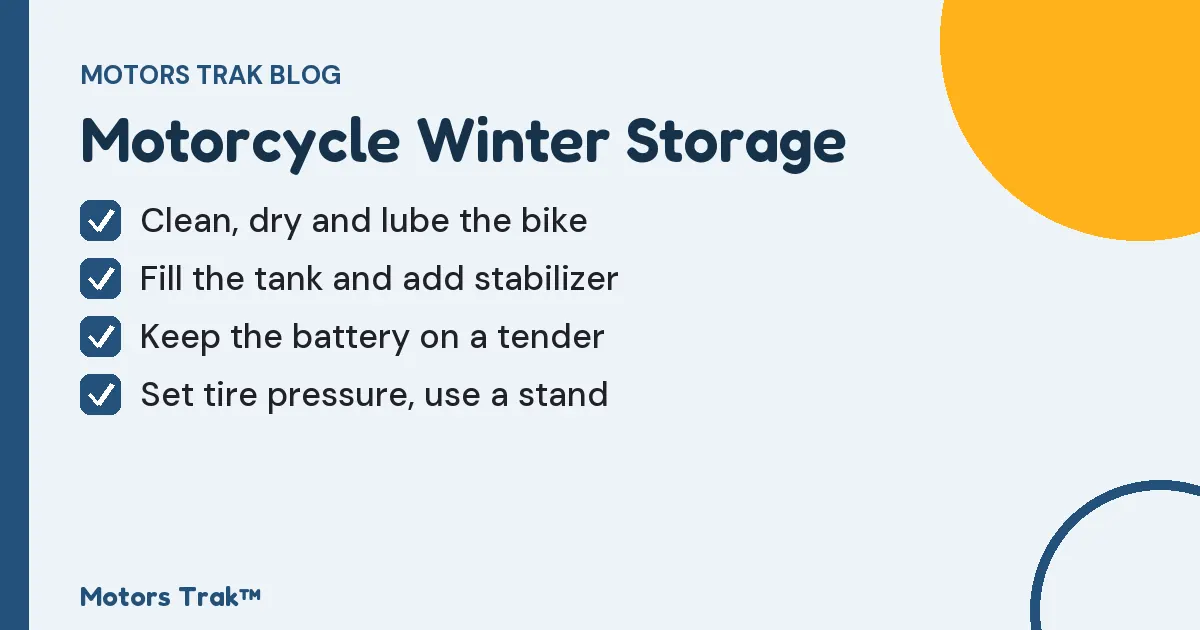
For riders in cold climates, there comes a week when the roads get salty, the mornings drop below freezing and the bike has to go away until spring. How you put it away decides whether the first ride next year is a joy or a trip to the shop.
A motorcycle sitting for three or four months faces the same enemies as any stored engine. Fuel goes stale, batteries drain, tires flat spot and moisture brings rust. A careful layup takes an afternoon. This checklist covers the common steps. Your owner's manual has the details for your bike, so check it as you go.
Before you begin
Pick the storage spot first. A dry garage or shed is best. Avoid places where the bike will be near a furnace, water heater or other open flame, since there is fuel in the tank. If you store in a shared or unheated space, plan for a breathable cover and some way to keep the battery charged.
Gather your supplies.
- Motorcycle wash, a soft cloth and a dry towel or blower
- Fuel stabilizer
- Chain cleaner and lube, if your bike has a chain
- A battery tender or maintainer
- A tire pressure gauge
- A rear stand or paddock stand, if you have one
- A breathable motorcycle cover
Steps
- Wash and dry the bike. Road salt, bug splatter and grime hold moisture against paint and metal all winter. Dry it fully, including hidden spots, before storage.
- Change the oil if it is due. Many riders change the oil before storage so the engine sits with fresh oil rather than used oil. Check your manual's schedule.
- Fill the tank and add stabilizer. Harley-Davidson's winter storage advice is to fill the tank and add fuel stabilizer, then run the engine for a few minutes so treated fuel moves through the system. A full tank leaves less room for moisture. On a carbureted bike, your manual may also call for draining the float bowls.
- Clean and lube the chain. If your bike has a chain, clean it and apply lube so it does not rust while it sits.
- Care for the battery. Batteries slowly lose charge in storage, and cold makes it worse. Either connect a battery tender for the winter, or remove the battery and store it somewhere cool and dry on a maintainer. Harley-Davidson suggests a tender to keep the battery healthy.
- Set the tires. Inflate the tires to the pressure in your manual. Michelin's motorcycle storage advice includes checking pressure and keeping weight off the tires when you can, such as with stands, or moving the bike from time to time so the same patch of tire is not always on the ground.
- Plug and cover. Some riders cover the exhaust openings and air intake to keep small animals out. If you do, leave yourself a reminder to remove them before starting. Use a breathable cover so moisture does not get trapped against the bike.
- Log the layup. Record the date, the odometer reading, the oil and parts used and anything you noticed, like a worn tire or a weeping fork seal. In spring you will know what was done and what still needs attention.
Should you start the bike every few weeks?
Many riders were taught to fire the bike up every couple of weeks over the winter. Harley-Davidson advises against starting a stored bike just to let it idle. A short idle does not get the engine hot enough to burn off the moisture it creates, so water can collect in the oil and exhaust. If you are not going to ride it, prepare it properly and leave it be.
Spring wake up checklist
When the weather turns, do a quick check before the first ride.
- Remove any plugs from the exhaust and intake.
- Reinstall or check the battery and confirm it holds a charge.
- Check tire pressure and look for cracks or flat spots.
- Check the oil level and look for leaks under the bike.
- Test the brakes, lights, horn and turn signals.
- Look over the chain or belt and adjust if needed.
- Take an easy first ride while the tires warm up.
Why storage changes your service schedule
A bike that sits for four months does not add miles, but time keeps passing. That matters because many manuals list services by miles or by time, whichever comes first. Oil, brake fluid and coolant can all be due by date even when the odometer barely moved. We cover the logic in change oil by time or mileage.
Storage also throws off mileage reminders. If an app or a calendar expects you to ride 500 miles a month, it will nag you about a bike that is parked. Motors Trak handles this with storage mode. Turn it on when the bike goes away and you get a seasonal checklist, and mile and hour reminders pause while the bike is stored. Because a time based service can still come due while the bike sits, it pays to glance at the log before the first spring ride. The app also checks NHTSA recalls for road vehicles and keeps your receipts and photos with each log entry. See the full feature list.
The same approach works for every other engine in the garage. If you also have a mower to put away, see how to store a lawn mower for winter.
Frequently asked questions
Should I fill my motorcycle gas tank for winter storage?
Most guidance, including Harley-Davidson's, says to fill the tank and add fuel stabilizer, then run the engine briefly so the treated fuel circulates. A full tank leaves less room for moisture to condense. Check your owner's manual for any model-specific advice.
Should I take the battery out of my motorcycle for winter?
You can either leave it in with a battery tender connected, or remove it and store it in a cool, dry place on a maintainer. The goal is to keep it charged so it does not sit discharged in the cold.
Is it bad to start a motorcycle during winter storage?
Starting it just to idle for a few minutes can do more harm than good. Harley-Davidson advises against it, because a short idle does not warm the engine enough to burn off moisture. If you want to run it, take a real ride long enough to fully warm it up.
Can I store a motorcycle outside for winter?
A garage or shed is far better. If you have to store it outside, use a waterproof but breathable cover, keep it on a firm surface, lock it, and check on it regularly. Expect to do more cleaning and corrosion checks in spring.
Sources
- Harley-Davidson Insurance: Winterizing Your Ride
- Michelin: Motorcycle Winter Storage
- NHTSA: Check for Recalls by VIN