 Motors Trak™
How To Store A Lawn Mower For Winter, Step By Step
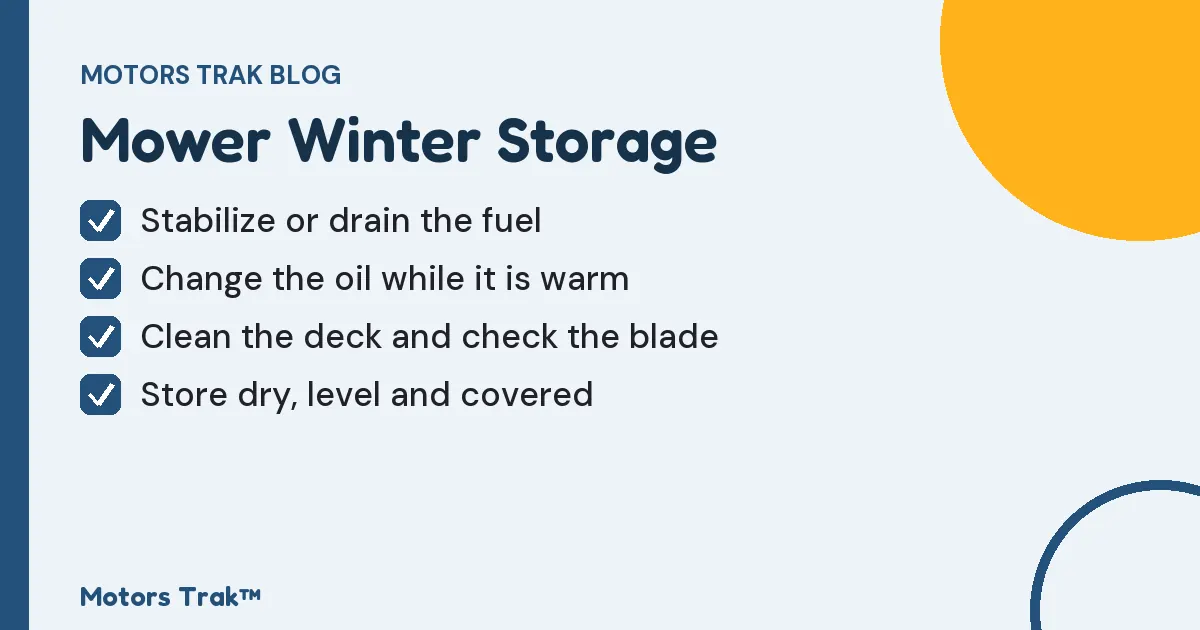
The last mow of the year is easy to forget about. You park the mower in the shed, close the door, and do not think about it until April. Then it will not start, or it runs rough, and the first warm weekend turns into a repair job.
Most spring mower trouble starts with how the mower was put away. Old gas is the usual cause. The good news is that winter storage takes about an hour and a few supplies. This guide covers a typical walk-behind or riding mower with a small gas engine. Your owner's manual has the final word for your model, so keep it handy.
Why winter storage matters
Three things go wrong with a mower that sits all winter.
- Fuel goes stale. Honda's small engine manuals warn that gasoline can start to deteriorate in as little as 30 days. Stale fuel leaves gum and varnish in the carburetor, which is the most common reason a mower will not start in spring.
- Old oil sits in the engine. Used oil carries acids and debris. Briggs and Stratton recommends changing it before storage so the engine sits with clean oil.
- Moisture and grass cause rust. Wet clippings packed under the deck hold moisture against the metal for months.
Mississippi State University Extension advises treating or draining fuel in any small engine that will be stored for two months or more, which covers most mowers in most of the country.
What you need
- Fuel stabilizer, if you plan to keep fuel in the tank
- The right engine oil and a drain pan
- A putty knife or plastic scraper and a brush
- A spark plug wrench, and a new plug if the old one looks worn
- A new air filter, if yours is dirty
- Gloves and eye protection
- A breathable cloth cover
Steps
- Deal with the fuel first. Briggs and Stratton suggests adding fuel stabilizer to a full tank, then running the engine for a few minutes so treated fuel reaches the carburetor. The other option is to run the mower until it is out of fuel, or drain the tank, if your manual calls for that. Do this outdoors, with the engine cool before you handle fuel.
- Change the oil while the engine is warm. Warm oil drains faster and carries more debris out. Disconnect the spark plug wire first so the engine cannot start. Follow your manual for draining, whether through a drain plug or by tipping. Many manuals warn against tipping a mower or storing it on its side unless they allow it, since oil and fuel can leak into the air filter.
- Disconnect the spark plug and protect the cylinder. With the wire off, remove the plug. University of Georgia Extension suggests adding a small amount of engine oil into the cylinder through the spark plug hole and turning the engine over slowly to coat the cylinder wall. Reinstall the plug, or put in a new one if it is fouled or worn.
- Clean the air filter. Paper filters that are dirty should be replaced. Foam filters can often be washed. North Dakota State University Extension lists a clean air filter as part of a good winter prep.
- Clean the deck. With the plug wire off, scrape packed grass from under the deck and brush off the top of the engine. Dry grass is a fire risk near the engine and a rust risk on the deck.
- Check the blade. NDSU suggests sharpening the blade before storage, so the mower is ready in spring. If you remove it, mark which side faces down. Wear thick gloves.
- Care for the battery on electric start or riding mowers. NDSU recommends removing the battery and storing it somewhere cool and dry where it will not freeze. Many owners keep it on a maintainer over the winter.
- Store it dry and level. A shed or garage is ideal. NDSU suggests a cloth cover, since plastic can trap moisture. Keep the mower away from furnaces, water heaters and anything with a pilot light if there is fuel in it.
- Write it down. Note the date, the oil and parts used, and the engine hours if your mower has an hour meter. Next spring you will know exactly what was done.
Stabilizer or empty tank?
Both approaches work, and the right one depends on your mower and your manual. Stabilizer in a full tank leaves less room for moisture to condense and means the mower is ready to go in spring. Running the tank dry removes the fuel entirely, which some manufacturers prefer for long storage. University of Georgia Extension notes that stabilizer extends the life of fuel for a few months, so it is a storage aid, not a forever fix. If your mower will sit for more than one season, check what the manual says about draining.
Spring start up
When the grass starts growing again, a short check gets you going.
- Reinstall the battery and spark plug wire.
- Check the oil level.
- Add fresh fuel if you drained the tank.
- Look over the blade, belts and tires.
- Start it outdoors and let it run for a minute before mowing.
Keep a record of every engine
A mower is often one of several engines in a household, along with a car, a motorcycle, maybe a boat or a generator. Each has its own schedule, and most small engines track service by hours, not miles. Our guide on engine hours vs miles explains the difference.
Motors Trak keeps all of them in one garage. You can track the mower in engine hours, log each oil change and part, and turn on storage mode for the winter. Storage mode shows a seasonal checklist and pauses mile and hour reminders while the mower is put away. See the feature list for the rest. The same approach works for storing a motorcycle for winter.
Frequently asked questions
Should I drain the gas from my lawn mower for winter?
Either drain it or treat it with fuel stabilizer, following your owner's manual. Briggs and Stratton describes adding stabilizer to a full tank and running the engine so it reaches the carburetor. Some manuals prefer running the tank dry for long storage.
Can I leave my lawn mower outside in winter?
It is better to store it in a shed or garage. Rain, snow and freeze cycles speed up rust and can let water into the fuel. If you must store it outside, use a breathable cover and raise it off wet ground.
Should I change the oil before or after winter?
Before. Briggs and Stratton recommends changing the oil before storage so the engine does not sit with used oil all winter. Change it while the engine is warm so it drains fully.
Is it OK to store a lawn mower on its side?
Only if your owner's manual allows it. Tipping a gas mower can let oil or fuel leak into the air filter or carburetor. If you need to save space, drain fuel and oil first, as some manufacturers advise.
Sources
- Briggs and Stratton: Putting Your Lawn Mower To Rest For Winter
- Mississippi State University Extension: Prep Lawn Equipment For Winter
- North Dakota State University Extension: Winterize Your Mower
- University of Georgia Extension: Small Engine Care (Circular 1073)
- Honda EU2200i Owner's Manual (fuel storage guidance)