 Motors Trak™
Went Over Your Oil Change Mileage? What Happens Next
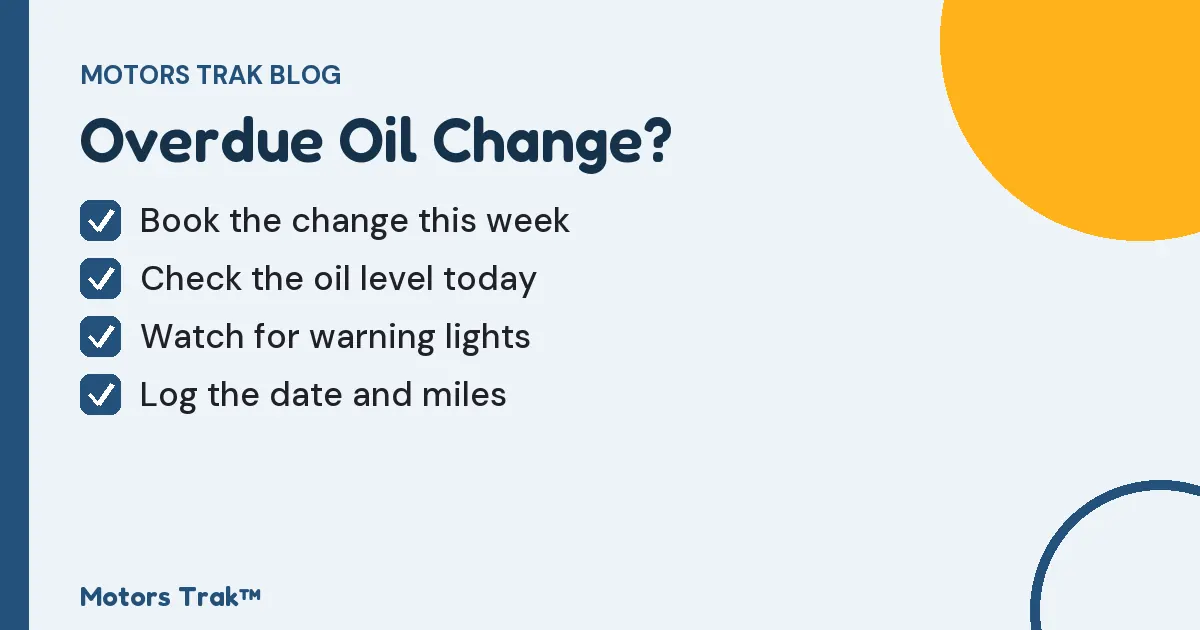
If you go a few hundred miles over your oil change mileage, the engine is very unlikely to be harmed. The risk grows the longer you wait, because old oil protects less, and very long gaps can lead to sludge, wear and expensive repairs.
So do not panic, and do not put it off either. Check the oil level today and book the change for this week.
What oil does, and why it wears out
Engine oil keeps metal parts from touching, carries heat away and holds dirt and combustion byproducts so the filter can catch them. Additives in the oil fight rust, foam and buildup.
Over time and miles, those additives get used up and the oil collects contaminants. Short trips add moisture and fuel to the oil because the engine never gets fully warm. This is why manuals list an interval in both miles and months, which we cover in change oil by time or mileage.
The interval in your manual is not a cliff. Oil does not fail the mile after the sticker number. It is the point where the manufacturer wants fresh oil to keep the engine protected with a margin.
A little late versus a lot late
Here is a general picture. Your engine, oil type and driving all change it.
- A few hundred miles or a couple of weeks late. Very unlikely to cause harm. Get it done soon.
- One to two thousand miles late. The oil is past its planned life. Protection is lower, especially under heat, towing or short trips. Change it now.
- Many thousands of miles late, or skipped changes over years. This is where real damage tends to happen. Sludge can form and block oil passages. Parts wear faster. Some engines start to burn oil.
Older engines, turbocharged engines and engines that already use some oil between changes have less room for delay. So do engines under severe service, as defined in your manual. AAA advises drivers to follow the owner's manual and to use the severe schedule when their driving fits it.
Signs your oil change is overdue
Many cars give few signs until the oil is very old. These are worth watching.
- The oil change or maintenance light is on.
- The oil pressure warning light comes on. Pull over safely and turn off the engine, then check the level. This light means a problem with oil pressure, which can quickly damage the engine.
- The level on the dipstick is low.
- The oil on the dipstick is very dark and gritty, or looks milky.
- The engine sounds louder or ticks more than usual.
- You smell burning oil.
Dark oil alone is not proof of a problem. Many modern oils darken quickly as they hold dirt. Level and warning lights matter more.
What to do right now
- Check the oil level with the engine off and on level ground, following your manual. Top up with the oil type listed in the manual if it is low.
- Book an oil and filter change as soon as you can.
- Drive gently until then. Avoid towing and long, hard runs if you can.
- If a warning light came on or the engine sounds different, tell the shop when you book.
- After the change, write down the date and the odometer reading.
That last step is what keeps it from happening again.
Will a late oil change void my warranty?
The Federal Trade Commission explains that a manufacturer cannot void a warranty just because you used an independent shop or did the work yourself. It also says a manufacturer can deny a claim if it shows that a lack of maintenance caused the problem. Records of each oil change, with dates and mileage, are your proof that the car was cared for.
That is general information, not legal advice. Your warranty booklet has the exact terms for your car. Our post on how long to keep car maintenance records covers what to keep.
Why oil changes slip
Few people decide to skip an oil change. It slips for ordinary reasons.
- The windshield sticker fell off or faded.
- A second car, a truck or a motorcycle runs on a different interval.
- You drive less than usual, so the miles never seem to arrive, while the months pass.
- Your oil life monitor and the sticker disagree, so you wait.
- The shop that used to remind you closed or you moved.
Households with several engines feel this the most. A car, a truck, a boat and a mower each have their own schedule in miles, hours or months.
Keep the next change in front of you
Motors Trak sets reminders by date, miles or engine hours, whichever comes first, for every vehicle and machine you own. The Home Screen widget shows what is due next. Ask Siri "what is due" or say "log service" after the change, or use Log By Voice to record it. Each entry keeps the date, odometer and any receipt you scan. See the full feature list.
For a full log beyond oil, our guide on how to keep track of car maintenance shows a simple setup.
Frequently asked questions
Is it bad to go 1,000 miles over an oil change?
It is past the planned interval, so protection is lower, but one late change of that size is unlikely to cause damage on its own in a healthy engine. Change the oil soon and avoid towing or hard driving until then.
What happens if you never change your oil?
Over time the oil breaks down and fills with contaminants. Sludge can form, parts wear faster and the engine can fail. Repairs at that point can cost far more than years of oil changes.
Can a late oil change void my car warranty?
The FTC says a manufacturer can deny a warranty claim if it can show missing maintenance caused the problem. Keep receipts and records of every oil change with dates and mileage.
Should I check my oil if the change is overdue?
Yes. Check the level today, following your manual, and top up with the right oil if it is low. Then book the change. If the oil pressure light comes on, stop driving and check it.
Sources
- AAA: How Often Should You Change Engine Oil
- Federal Trade Commission: Auto Warranties and Auto Service Contracts