 Motors Trak™
Do Service Records Help When You Sell Your Car?
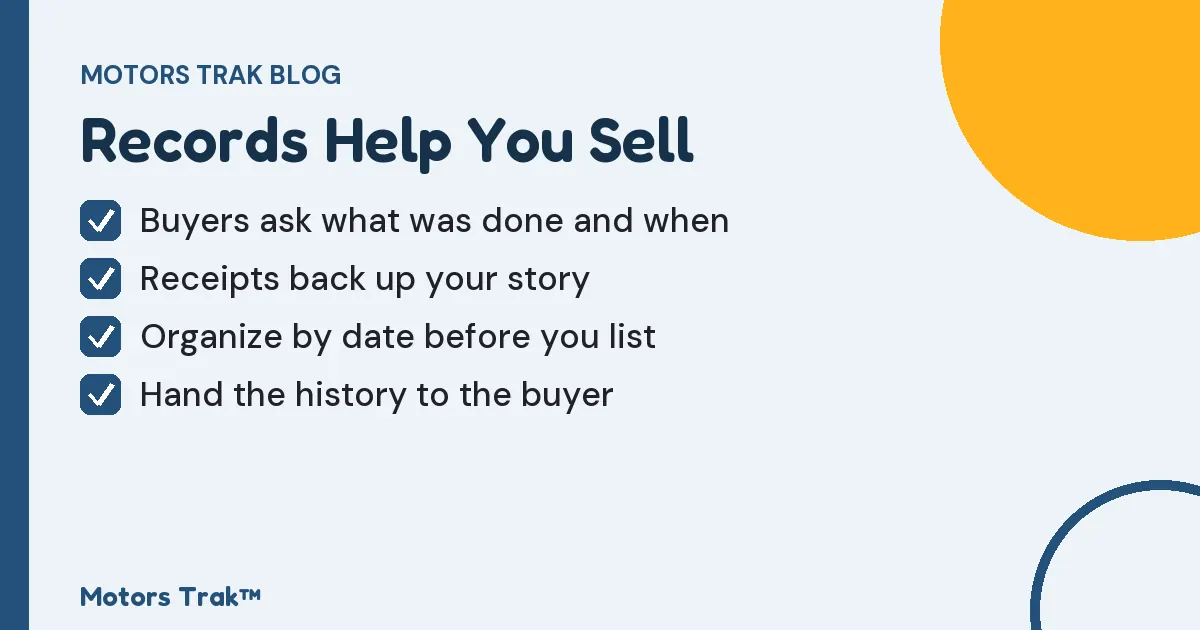
Picture two listings for the same used car. Same year, same trim, similar miles. One says "well maintained." The other says "well maintained, full service history attached," and shows a dated list of oil changes, brake jobs and fluid services. Which one would you call first?
Service records reduce how much a buyer has to guess. Used car buyers are taking a risk, and anything that lowers that risk makes your car easier to sell. This post looks at why records help, what buyers look for, and how to get yours ready.
Why buyers care about records
A buyer cannot see inside the engine. They can drive the car, look it over, and pay for an inspection, but none of that tells them whether the oil was changed every year or every three years. Records fill that gap.
The Federal Trade Commission's advice to used car shoppers includes getting an independent inspection and checking a vehicle history report. The FTC states plainly that "a vehicle history report is not a substitute for an independent vehicle inspection." Your own records go further than a history report, because they show routine care that never shows up in a third-party database, such as the oil changes you did in your driveway.
Records also answer the questions a careful buyer will ask anyway.
- When was the oil last changed?
- Has the timing belt been replaced, if the engine has one?
- When were the brakes done?
- Have the open recalls been fixed?
- Was the car ever in for a major repair?
A seller who can answer with a receipt sounds more trustworthy than one who answers "I think so."
Do records raise the price?
We do not know of a reliable public study that puts a single dollar figure on the value of service records, so we will not quote one. The logic points one way. A buyer with fewer unknowns has fewer reasons to offer less.
Records can also protect you after the sale. If a buyer later claims you hid a problem, a dated history of the work you did shows how the car was cared for.
What buyers look for in a service history
Not all records carry the same weight. Buyers tend to focus on a few things.
- Regular oil changes. A steady pattern by date and mileage is the clearest sign of care.
- Big scheduled jobs. Timing belts, transmission service, coolant flushes and spark plugs at the intervals in the owner's manual. Missing big jobs can be a reason for a lower offer.
- Repairs with explanations. A receipt for a replaced water pump is reassuring. An unexplained gap is not.
- Recall work. Proof that recalls were fixed at a dealer.
- Consistent mileage. Odometer readings on each record that rise steadily over time.
How to get your records ready before you list
A shoebox of receipts is better than nothing. An organized history is better still.
Sort everything by date. Lay out every receipt and invoice in order. Note the odometer reading on each one if it is printed.
Fill gaps where you can. Dealers and some chain shops can print the service history for your VIN from their systems. Ask the shops you used.
Check for recalls. Enter your 17 character VIN at nhtsa.gov/recalls. If a recall is open, get it repaired at a dealer before you list. Recall repairs are free.
Make a one page summary. List the major services with dates and mileage at the top, so a buyer can scan it in a minute. Keep the full receipts behind it.
Keep copies for yourself. Hand over originals or copies, but keep a scan in case of questions later.
If you have not kept a log so far, our guide on how to keep track of car maintenance shows how to start one with your next car. And if you are wondering what to save in the meantime, see how long to keep car maintenance records.
Handing the history to the buyer
How you hand over the records matters less than handing them over at all. Common options include:
- A folder of paper receipts with the summary on top.
- A printed or emailed PDF of your maintenance log.
- A spreadsheet export.
Motors Trak was built with this moment in mind. Every oil change, repair and part you log goes into one service history, with receipts and photos attached. You can export it as a PDF or CSV to share with a buyer, or use Send Record To Buyer to pass the full history along. If you are on the buying side, Import From Seller brings a seller's record into your own garage. See how it works on the features page.
Selling something other than a car
The same idea applies to motorcycles, boats and other machines. Boat buyers often ask for engine hours and proof of winterizing. Motorcycle buyers want to know how the bike was stored. A clean log helps there too. See how to winterize an outboard motor for the records boat buyers expect.
Frequently asked questions
Do service records add value to a used car?
They give buyers evidence that the car was maintained, which lowers their risk. We do not know of a reliable study that puts a fixed dollar amount on records, but a documented history gives buyers fewer reasons to offer less and helps a listing stand out.
What if I lost my car's service records?
Ask the dealers and shops you used, since many can print a service history by VIN. Gather any receipts you still have, add what you remember with approximate dates, and start a log now for the rest of your ownership.
Should I give the original receipts to the buyer?
Many sellers hand over originals and keep scans for themselves. Others give copies. Either works, as long as the buyer gets a complete, readable history.
Is a vehicle history report the same as service records?
No. A history report draws on third-party data such as title records and some reported service visits. Your service records show the actual work done, including work a report may miss. The FTC also notes that a history report is not a substitute for an independent inspection.
Sources
- Federal Trade Commission: Buying a Used Car From a Dealer
- Federal Trade Commission: Auto Warranties and Auto Service Contracts
- NHTSA: Check for Recalls by VIN